Best hypercars 2022
With growing concern over the impact on our environment, air quality and the safety of road users, you'd think that hypercars were things of the past - that the excess and glamorous extravagance aren't in tune with how many people view their lives today.
But this isn't true. Thankfully people are still enamoured with these glorious machines, as anyone who appreciates the engineering it takes to create this kind of performance will find them endlessly fascinating.
Hypercars are even seeing a little rebirth at the moment, with top-of-the-range manufacturers like Koenigsegg and McLaren aiming for better high speeds, seemingly just because they can.
The McLaren F1 shocked the world with its 240.1mph top speed, and they're constantly trying to improve. Buyers are being well looked after, with cars chock full of the technical marvel factor and improvements coming straight from the racing world.
There are endless new hypercars yet to emerge from manufacturers' headquarters that hypercar fans have to look forward to. Things like the Project One from Mercedes-AMG, the Aston Martin Valkyrie, Gordon Murray T50, Lotus Evija (the fastest of all-electric cars), SSC Tuatara Pininfarina Battista, Rimac Concept Two and countless other cars. Outperforming your competitors is the essence of the hypercar market, with performance and aesthetic styling constantly moving us forward.
What Is A Hypercar?
Before moving on to which hypercars are juking it out at the top of their field, it's probably helpful to go through what types of vehicles are classed as "hypercars". The term first came about in the 1920s, when The Times newspaper used it to describe the new Bently Ensign and its 6.7-litre engine.
But, while the sentiment is the same, as you'd expect, things have changed a bit over the past 100 years. Hypercars are the top 1% of cars, providing only the most supreme performance to owners and drivers. The original modern hypercar was the first Lamborghini Miura back in 1963, which boasted a 0-60mph of just under 6 seconds and a top speed of 180mph. At the other end of the scale, we have the new Lotus Evija.
This latest addition to the hypercar paddock is a fully electric vehicle that can get from 0-180 in under 9 seconds (let that sink in). The Evija is also insanely exclusive, which is another qualifying factor for hypercars, with only 130 being built. It's also stunningly designed and expensive (costing you a cool £2 million), but as the most powerful fully electric hypercar, it's an amazing piece of technology. But so are supercars, and what's the difference between a hypercar and a supercar?
Hypercar vs Supercar
Essentially it's the build quality that separates hypercars and supercars. Of course, all high-performance limited edition sports cars, supercars and hypercars are designed to give you the most elegant, high-speed driving experience possible.
But the staying power above 100mph puts hypercars above other luxury high-performance cars. Naturally, this means increased safety requirements, hence the higher price tags.
Best hypercars
Here we've listed some of the most impressive cars in the world. Given that hypercars are far and above any other type of car, you can also think of this list as charting some of the fastest, most powerful and most expensive cars in the world. Most will have a modern hybrid powertrain, while some still rely entirely on sophisticated combustion engines.
Still, either way, the cars on this list are incredibly elegant, fast and agile.
Ferrari LaFerrari

The Ferrari LaFerrari really is the ultimate hypercar, hence why Ferrari claims the first spot on our list.
With a naturally-aspirated 6.3-litre V12 producing 789bhp, backed up by 161bhp of electrical energy going straight to the rear driving axle, the LaFerrari truly is a powerful car.
It gets from 0-62mph in just 2.4 seconds and costs just over £1 million.
The last of the 500 models they produced came out of Ferrari's factory in 2015 and hasn't been surpassed just yet. It embodies everything the Italian manufacturer stands for and is considered the flagship hypercar of the entire genre.
McLaren Senna
Anything named after the great Ayrton Senna and coming from the McLaren factory can't help but be included in a list of the best hypercars. Not to mention that Senna and McLaren go together incredibly well, as any F1 fans will know.
Of course, the fact that McLaren is using Senna's name will elicit opinions from many motoring fans, but given how the hypercar performs and looks, we wouldn't complain. Its mighty V8 generates just under 800bhp, and it performs just as well on track as it does as a road car. It's also surprisingly straightforward to drive for one of the fastest production cars in the world.
McLaren P1
The McLaren name and worldwide reputation have been made famous mostly through their F1 team, and it took all their strength not to release a copy of their F1 car for the McLaren P1, part of McLaren's Ultimate Series.
Instead, the British manufacturer chose to give buyers a combined-output 903bhp hybrid hypercar.
With aerodynamics you'll see at professional racing events, lightweight chassis and sophisticated suspension, the P1 is sure to impress.
The technological superiority, racing speeds, and surprising control when out on the road at low speeds ensure the P1 remains one of the best hypercars out there.
Lotus Evija
As previously mentioned, the Lotus Evija is the incredibly quick, incredibly impressive first all-electric hypercar to hit the motorsport world. The 70kWh battery powers four powerful electric motors that generate up to two thousand metric horsepower.
This can rocket the Evija from 0-186 in just 9 seconds, which is four seconds quicker than the next entry on our list. The balance from the all-wheel-drive layout when moving at high speed is also something you won't believe unless you try.
Porsche 918 Spyder
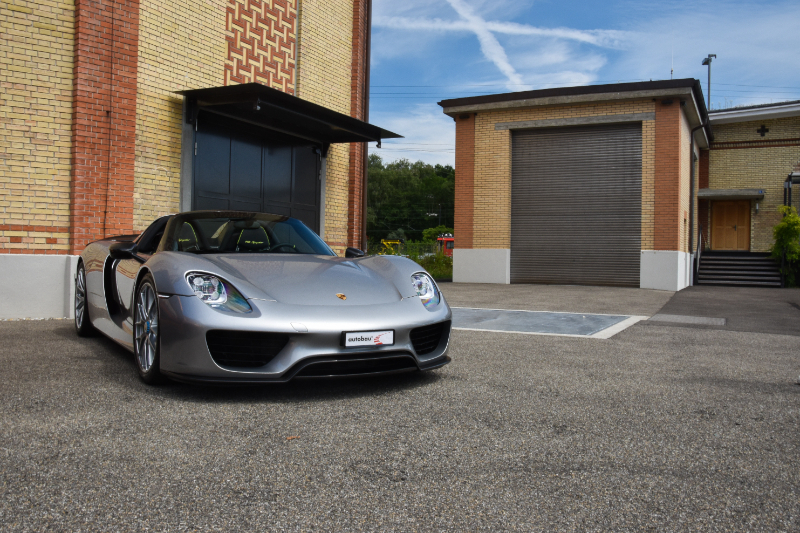
Where the Porsche 918 Spyder stands out is its impressive electrical power capacity. With a set of heavy motors and a huge battery, it really makes the most out of the zero-emission technology.
Besides this, it has a naturally-aspirated V8 to provide the real power, giving the four-wheel-drive system up to 900lb-ft of torque to play with.
While it may be heavy, it's got the power to send it around a track at blistering speeds. It may not be as high-performance as the LaFerrari or McLaren P1, but it'll definitely put a smile on your face.
Aston Martin Vulcan
Nobody does excess quite like hypercar manufacturers, and if you want the most excessive of the excessive, the Aston Martin Vulcan is for you. It's a track-only model, so you won't be able to pop to the shops in this one. It also generates an incredible amount of exhaust noise - enough to get you an immediate black flag on any track day.
It produces up to 820bhp and demands all the concentration and physical effort of a true racing car to drive. But if ridiculous speed and astonishing track abilities are for you, and you can manage the Vulcan's handling, this hypercar is where you need to go.
Koenigsegg One:1
Another hypercar that gives you ridiculous amounts of horsepower, the Koenigsegg One:1, is the fastest thing to come out of Sweden by a mile.
Costing a couple of million pounds, the twin-turbocharged V8 gives you up to 1,300bhp, allowing it to reach up to 250mph in just 20 seconds.
But it's also surprisingly easy to drive at normal speeds when you're not trying to break the sound barrier. But you'll definitely want to push the accelerator when you can; with the active aerodynamics kicking in around 125mph, you'll feel like you're flying.
Lamborghini Centenario
As the name suggests, the Lamborghini Centenario was created to celebrate the birthday of the manufacturer's founder, Ferruccio Lamborghini. Therefore, you can imagine the kind of performance you can get out of it.
With a 6.5-litre V12, Lamborghini only ever made 40 of these anniversary models, charging £1.6 million a piece. Despite lacking some of the technological sophistication and wizardry compared to others on this list, the Centenario is as noisy and excessive as you'd want a real hypercar to be.
Bugatti Chiron
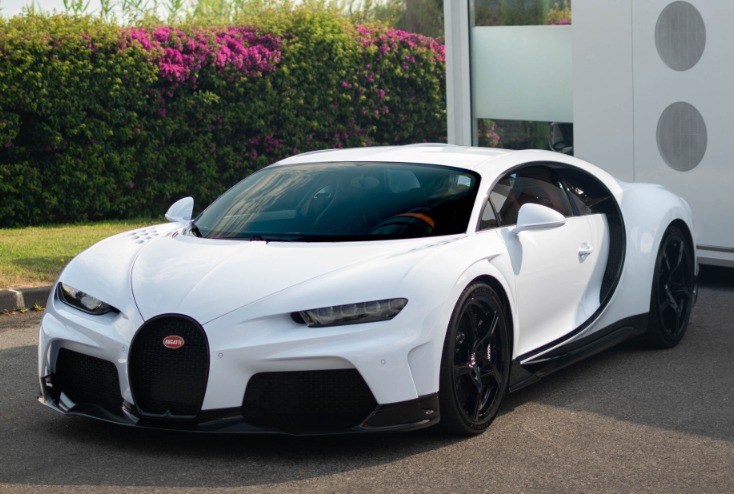
It was back in 2005 that Bugatti gave us the world's then fastest hypercar with the Veyron.
But thankfully, they didn't stop there. Just ten years later, they gave us the equally impressive Chiron, which is one of the most stunning carbon tubbed hypercars of the past few years.
It also came with a ridiculous and world-beating top speed of 304.7mph, thanks to the Bugatti Veyron Super Sport engine giving you over 1,500bhp. The only reason the Evija can get off the line quicker is due to the Chiron's turbo lag from its monstrous 16 cylinders.
Koenigsegg Agera RS
Another Koenigsegg? Yes, please! While it can't top the speed of the Chiron, it can certainly beat it in acceleration and braking, going from 0-400-0km per hour in just 36.44 seconds - five seconds faster than Bugatti's offering. It achieved this thanks to the real white knuckle ride of the 5.0-litre twin-turbo V8 that provides up to 1,160bhp.
The chassis is a honeycomb of carbon fibre and aluminium for a super lightweight car (hence the acceleration). While it's definitely a hypercar, it's also surprisingly practical at sane speeds, with plenty of storage space (for a car focused primarily on performance).
Pagani Huayra
Speaking of exclusivity, Pagani won't let any joker with a spare couple of million take their Huayra out for a spin. According to legend, once upon a time, they even offered leather interior accessories that were blessed by Il Papa himself in the Vatican.
The Huayra's 6.0-litre twin-turbocharged V12, courtesy of Mercedes-AMG, sends a ridiculous 720bhp straight through the rear-wheel steering system. If you're brave enough to disable the electric driving aids, you're really going to have to fight to keep this one on the road.
Bugatti Veyron
Going back to 2005, we find the Veyron and what a shock it was for the motoring world back then. Bugatti ominously announced that they were developing a 1,000 horsepower car with a shocking top speed of 250mph - and they delivered. With a top speed of 253mph and a 0-62 of just 2.5 seconds, the Veyron was a monster.
The engine was also just as impressive (or scary, depending on where you stand). Essentially, Bugatti tied two 8-cylinder engines to the same crankshaft to create a 16-cylinder beast fed by four turbochargers. It was the technical innovation of the hypercar world in its day, and many remember it as a true hero of its generation.
Ferrari Enzo
Another tribute to a manufacturing legend, the Ferrari Enzo is everything Ferrari V12s stand for. The naturally-aspirated V12 gives you a glorious 650bhp at 7,800rpm, sending you from 0-62 in just 3.1 seconds, with a top speed of 217mph.
While the engine may be a little old hat these days, with no turbochargers or electrical boosts, the rest of the car is definitely 21st-century.
With an electro-hydraulic transmission system, carbon-ceramic brakes and a full carbon fibre body, there's nothing to sneer at here.
But would you expect anything less from a car that carries the inimitable name of Enzo Ferrari? If you want to follow in a mighty tradition of motoring excellence and feel like a true racing driver, the Ferrari Enzo is the hypercar for you.
Porsche Carrera GT
While a figure like 604bhp won't impress many hypercar fans these days, it was truly exciting for the automotive industry in a time before the Veyron. This is where we find the Porsche Carrera GT. Based on the manufacturer's Le Mans prototype, the Carrera GT had a mid-mounted V10 that was lightyears ahead of its competitors at the time.
It was a tour-de-force for the hypercar industry with a carbon fibre engine cradle, carbon-ceramic brake discs, and an electronic rear spoiler for active aerodynamics. While some may argue it's not as aesthetically pleasing as some of the other hypercars on the list, that all comes down to personal preference. Some people want to look good; others want to drive incredibly fast.
McLaren F1
Compared to the more up-to-date models in this list, or even the Enzo in the previous entry, the McLaren F1 is something out of the glorious past of motoring. Power steering? No. Traction control? No. Any digital aids whatsoever? None. You'll have to drive this car all by yourself.
But that's to be expected for a car that's now over 25 years old. Powered by a BMW V12 that generates over 600bhp, it's truly a powerful engine.
Of course, given the lack of traction control, you'll have to be careful when pushing it to its 240mph top speed. In fact, most pictures of the McLaren F1 show it going sideways, given how difficult it is to keep in a straight line. But if you aren't afraid to take on a real nerve-testing challenge, step up and have a go at the McLaren F1.